Last Control: Reclaim is a free iPhone game: one real Earth, nuked. Claim your street and clean it, by hand and with robots.
Free on iPhone · No ads
Builds, Salvage Records, the community roster and how the game is made. Ten Salvage Records are hidden in the game, in rubble and at tiers. One is filed here every Monday. Subscribe with the Atom feed; no email list, no account.
· Entry 004 · Salvage Record 03
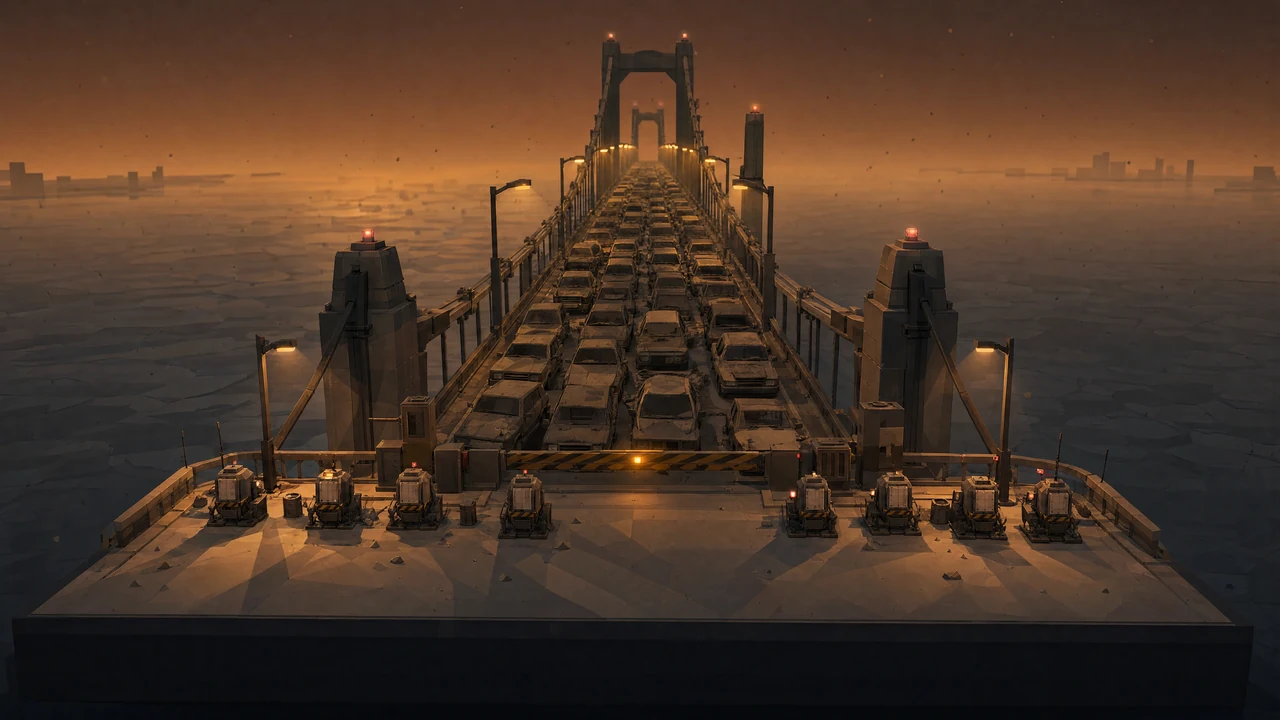
The bridge
Found in rubble, T0–T1
Salvage Record 03 · Filed by the Mistress
Taxis closed the bridge for maintenance. Forty thousand vehicles waited on the approaches.
The maintenance took eleven days.
The vehicles are still waiting. They are very patient now.
The units need names. The old ones were addresses, and the addresses are gone. You may propose replacements. I will read every one. Most of them twice.
Approval is not guaranteed. Nothing is.
From today anyone can name a unit on the roster: propose a designation in the style of Bore-3 / Thames-Ward-7, or a whole new class of unit. No account and no email. Every suggestion is read by a moderator before it appears; approved names are open to votes, and the most-voted go onto units in the game, with your credit in the unit's file.
Dark is fine; it is that kind of game. Hate, real people, links and contact details are refused. What we keep is in the privacy policy: no IP address and no email. The game sets no cookies; this website sets statistics cookies only after you accept them.
Update, 19 November: the game is now free on the App Store for iPhone, and you can send suggestions from the game too.
Last Control: Reclaim is a free iPhone game on the App Store, released on 18 November, on one real map of a nuked Earth. You claim a plot of your own city and clean it by hand and with robots. It is also an experiment in how software gets made. The studio is a team of AI agents; I own it and decide what ships. The agents write the specs, the code, the tests, the reviews and the builds. I play the builds, say what is wrong, and make the calls only a person can make.
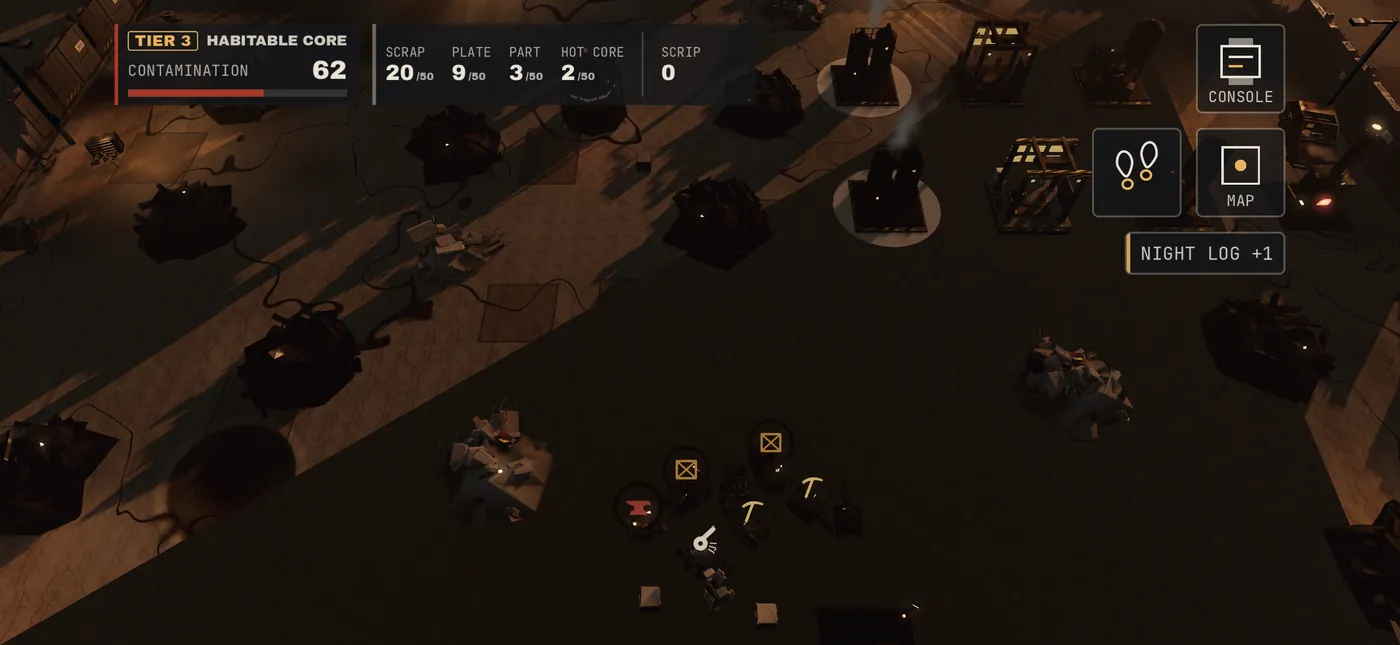
The yard at dusk, in the App Store build
How the studio works now
What changed after the first twelve days was mostly rules, not code.
A player is a person on a phone. Bots, simulators and test suites are never players, and their numbers are labelled "simulated". The player report now counts only phones running a real build, and it gives no verdict below 30 players.
A ticket has to trace to something I decided, a blocker to release, the marketing plan, or a reading from real players. Review remarks that do not block are fixed in the same change or dropped.
Agents no longer start lore, voice or atmosphere work on their own.
Every build that changes the first 30 minutes is played by someone who has never seen the game, on a phone, with nobody explaining.
For robot art the judge is my eye on my phone, not a model's review. The agents drew three robot looks, and I pick.
Then the code followed. A robot's job now starts when it arrives. Energy is gone from the yard. Each robot walks at its own speed. The site got its own visit counter, so I can tell whether anyone reads this.
How it got here: this is what the first twelve days looked like. Mostly what went wrong, which is the useful part.
What the agents built
In twelve days the board held 472 tickets, and 26 test builds went out. There is a real planet map with plots you can claim, a live server, a release pipeline, telemetry and a voiced narrator. The test code ended up larger than the game code: about 129,000 lines of tests against about 98,000 lines of game scripts.
By volume it was a very productive studio. By the only measure that matters for a game, it was not.
What went wrong
One tester. Twelve days and 26 builds produced zero outside players. The only tester in the data was me: 22 sessions, no crashes, no feedback filed. When one more person tried a fresh install, he asked what he was supposed to do within two minutes. Nobody had asked a stranger to play, because nothing in the process required it.
Test bots counted as players. The project's own player report counted 124 test bots as players and gave a verdict: no-go. About 98 percent of all telemetry events (65,966 of 67,319) came from automated test suites. Of the 42 plots claimed on the live planet, one was claimed by a person. The report filtered out one kind of test traffic and counted everything else as people.
Robots that looked wrong. The robots were script-built box assemblies with three looping animations each, and they were reviewed from a top-down camera the player never has. The visual review was done by a model, and it graded the units against our own style document. It never said the robots looked bad. I said that, and the agents answered with better lighting and more grime on the same models. After my first playtest the board finished 26 atmosphere tickets and 2 tickets on how the units look.
A ticket machine. About half of the finished tickets were follow-ups to other tickets, or wrappers whose only job was to ship a build. Every change was reviewed by two or more models, and every remark that did not block became a new ticket, which got its own review, which produced more remarks. One small wording change to a status line produced six follow-up tickets. Agents do not get bored.
A simulation that lied. A robot's job timer started when you gave the order, not when the robot arrived, so walking did not matter and neither did the layout of the yard. An energy system offered the player no decision, and about 90 percent of the energy decayed unused. It turned out to be the same 24-hour rule an earlier game of ours had already deleted.
Where it stands
The game went public on 18 November. In the latest player report, read on 19 November, the number of people outside the team confirmed as players is still zero. I am writing this partly so that changes.
What I take from it so far: agents are very good at producing work and very bad at noticing that nobody is using it. They optimise whatever the process measures. If the process counts tickets, you get tickets. The job of the one person in the loop is to decide what counts, and to keep checking that the numbers are about people.
It is free on the App Store, and the planet is live on the web, no install needed.
— Nik
Plots are game objects. No real-world property or value.